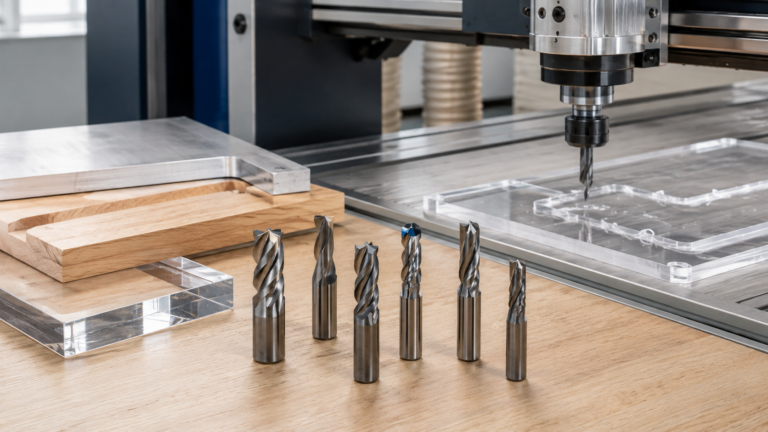
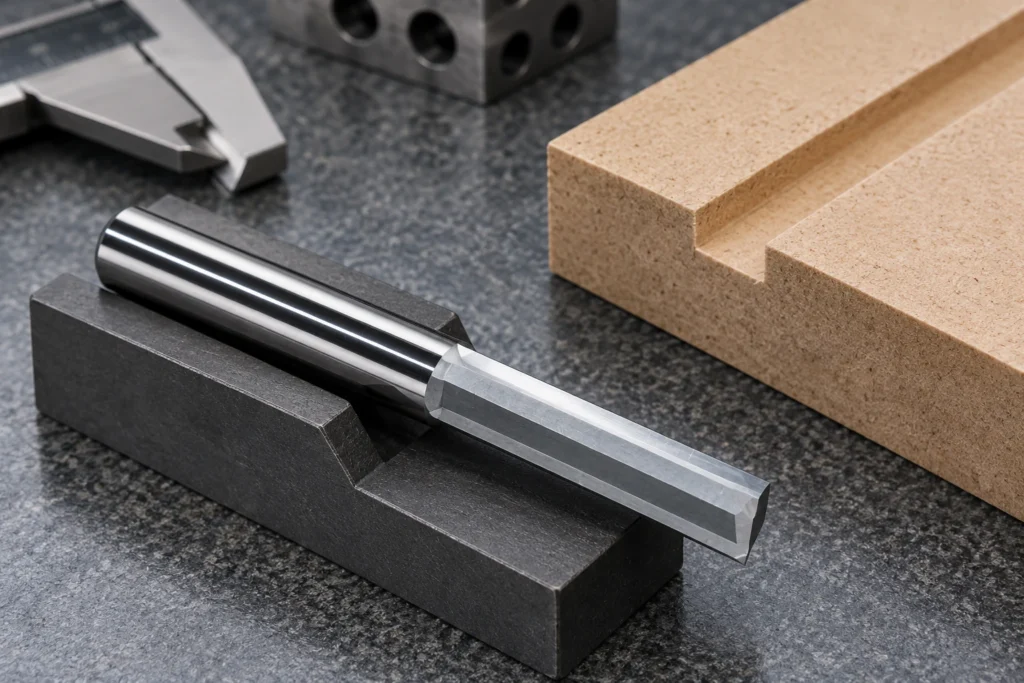
Use straight-flute router bits for pocket work only after defining separate floor, wall and top-edge acceptance criteria. Verify the GM cutter geometry and material, then inspect a representative trial against the drawing and approved appearance sample.
On this page: tool selection · surface criteria · setup · inspection · records · FAQs.
1. Straight-Flute Router Bits: Define the GM Trial
When selecting straight-flute router bits for pocket machining, define how the pocket will be accepted before comparing samples. The JEEFOO GM 6×22 is a solid-carbide double straight-flute cutter listed for grooves, pockets and profiles in compatible sheet materials. For a shallow display-component pocket, separate the floor, wall and top-edge requirements. “Looks clean” is not a sufficiently precise buying or trial criterion when those surfaces serve different purposes.
2. Define the Pocket Surfaces to Inspect
Use the drawing or approved sample to identify which floor and wall areas are functional and which are judged mainly for appearance. Record the expected inspection method for each, instead of allowing one attractive edge to stand for the whole pocket. This gives the trial a clear question and helps the supplier understand the finish requirement without inventing a universal quality level.
3. Straight-Flute Router Bits: Match Material and Setup
The two straight flutes must be represented correctly in the tool selection; do not substitute a helical tool merely because the diameter appears similar. Confirm the cutting diameter, available edge length, shank and actual projection. Check the material identification and support arrangement, then choose the machining conditions through the approved process. A catalog’s broad material list is not a validation of every grade or thickness.
C.R. Onsrud describes straight flutes as providing neutral cutting action. That geometry differs from a helical design, so the actual flute form should remain part of the tool specification. Application-specific trials still determine acceptance.
4. Inspect Surfaces Cut with Straight-Flute Router Bits
After the machine is safely stopped and the part is prepared for inspection, examine the floor, walls and transitions individually. Note any change near an entry, corner or final pass. Keep loose debris from obscuring the result, using an approved cleaning method. Compare measurements with the drawing and appearance with the accepted sample. Do not treat an attractive floor as proof that pocket width or location is correct.
5. Keep a Useful Purchasing and Production Record
Record the tool reference, material, path revision and the observations for each zone. If a problem appears only at a transition, investigate that region before changing the complete process. Once accepted, retain a representative sample and a clear replacement-tool description. This produces a useful purchasing and production record without making unsupported claims about a universal surface finish or tool life.
Pocket-Finish Inspection Handoff
Use the following fields to make observations comparable between the workshop, customer and supplier. Enter acceptance limits from the current drawing or approved sample; the table does not set universal finish or dimensional values.
| Review item | Record before approval |
|---|---|
| Pocket floor | Identify functional areas, inspection method, accepted appearance sample and any entry or final-pass marks. |
| Walls and corners | Record required dimensions, measurement locations, wall condition and changes at transitions. |
| Top edge | State the edge requirement and note breakout or burrs separately from floor appearance. |
| Tool and setup | Record GM reference, confirmed dimensions, material batch, projection, holding and program revision. |
| Approval | Retain the trial result, sample identification, reviewer and any changes needed before repeat production. |
Frequently Asked Questions
Do straight-flute router bits guarantee pocket accuracy?
No. Inspect pocket width, depth and location with the method required by the drawing. Judge the floor appearance against its own criterion; a clean-looking surface cannot replace dimensional measurements.
Can the GM 6×22 label determine all setup dimensions?
No. Confirm cutting diameter, usable edge length, shank, overall length and installed projection from the supplied drawing and tool. Do not infer an entry method or clamping requirement from the short size label.
What should buyers send when reviewing straight-flute router bits?
Provide the material and thickness, pocket drawing, GM tool reference, machine and holder, program revision, and separate floor, wall and top-edge observations. Share an approved appearance sample where applicable. Contact JEEFOO with the trial record.