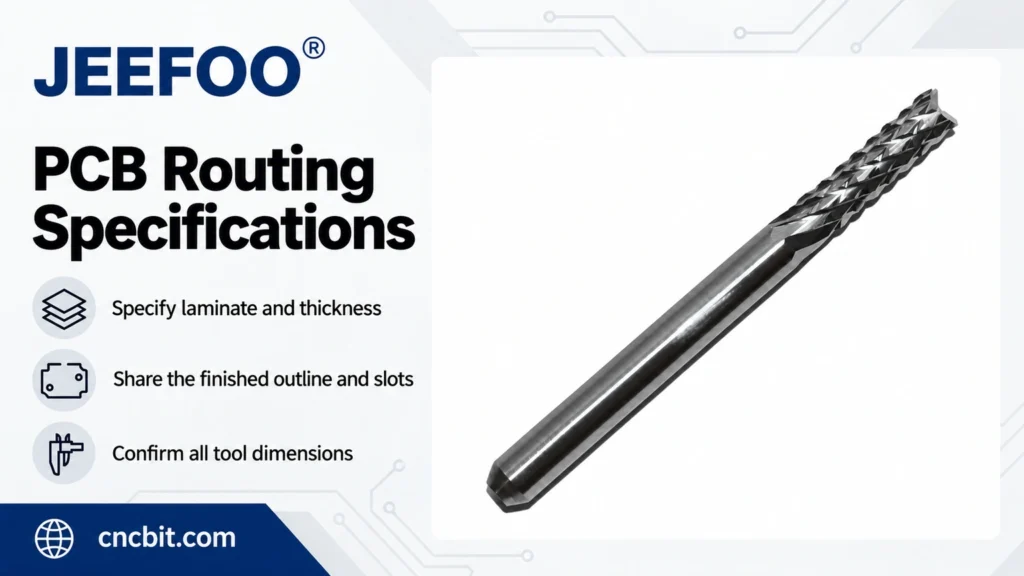
Useful PCB routing specifications describe the finished board, its laminate construction, and the machine that will cut it. A tooling enquiry becomes much easier to assess when those details arrive together in a clearly identified drawing package.
Make the mechanical file unambiguous
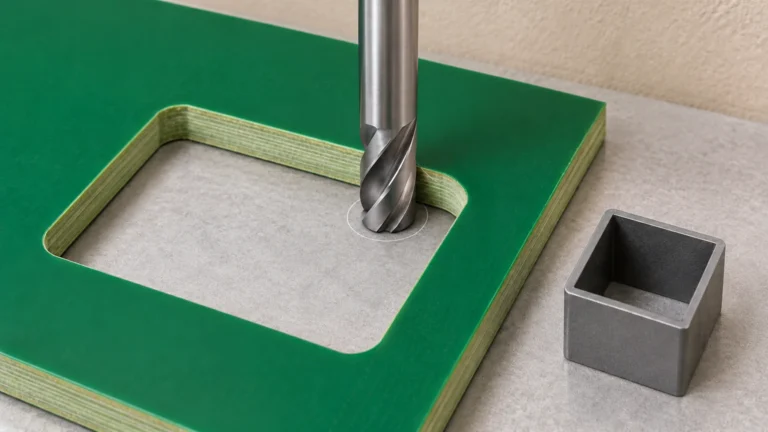
Supply the board outline and internal openings in the file format agreed with the recipient. State the units and drawing revision. Use a closed contour and identify the reference features used for dimensions. If a PDF drawing and manufacturing file are both supplied, check that their outlines match. Show any retained tabs and explain whether they belong to the machining fixture, assembly panel, or final delivered board. Do not leave their purpose to interpretation.
Describe the laminate and cutting depth
Give the laminate manufacturer and grade when known, along with the board thickness and relevant construction details. Identify copper layers, bonded layers, and any unusual edge requirements. For stacked processing, state the number of boards and the total stack arrangement. This information allows a supplier to assess the proposed tool rather than assuming that every material sold as PCB laminate behaves identically. Include an existing material datasheet when it is available.
Separate nominal dimensions from acceptance limits
List the dimensions that matter to fit and assembly, together with their specified tolerances. An outline dimension, a slot width, and a hole-to-edge relationship are separate requirements. Explain how critical features will be measured and whether a mating component or gauge is part of acceptance. Avoid inserting very tight tolerances simply to request better quality. Requirements should come from the product design and be reviewed against the manufacturing process.
Include machine details and a clear request
State the machine model, spindle operating range, collet or holder arrangement, extraction method, and current workholding approach. Attach the present tool reference if this is a replacement enquiry, and describe any observed problem with photographs. For a JEEFOO® PCB tooling enquiry through cncbit.com, ask for confirmation of tool dimensions, intended application, and a suitable trial approach. Identify missing information openly rather than replacing it with guessed values. Give every attachment a matching revision identifier so the supplier can confirm which documents were reviewed.
A complete enquiry gives the supplier a defined feature, material, and setup to review. Keep the approved drawing revision with the resulting tool reference so repeat orders retain the same technical meaning.