The radius is only part of the geometry
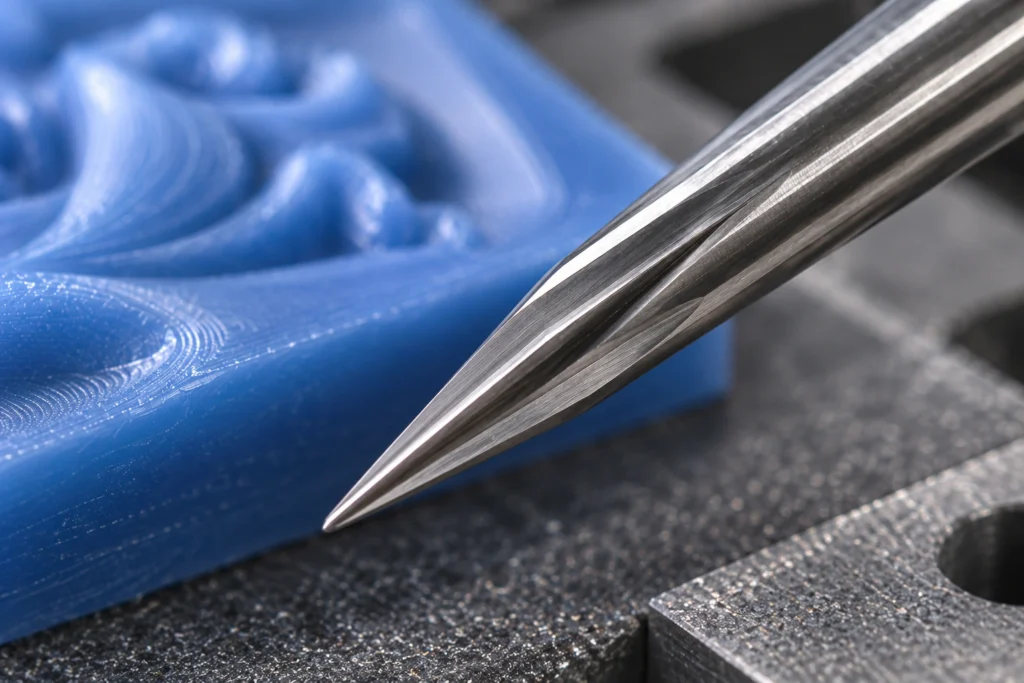
Taper ball end mill selection for relief machining requires more than matching the nose radius to a detail. The JEEFOO GC listing includes a 6×10×R0.5×100L two-flute tool, identifying a 6 mm shank, R0.5 nose and 100 mm overall length. Confirm the taper notation against the supplied drawing rather than interpreting the label alone. The buying question is whether the complete assembly has usable reach and boundary clearance for the intended path.
Check clearance beside the relief detail
Inspect the wall or raised feature next to the detail, using the complete tool profile rather than the ball tip alone. Include the tapered body and installed assembly when reviewing possible contact as the path moves along the boundary. If the drawing does not resolve a relevant dimension, confirm it before treating the tool as suitable for the relief job.
Distinguish overall length from usable reach
A long tool is not automatically suitable for a deep feature. The necessary projection depends on the part, fixture and holder, while the usable cutting region depends on the verified cutter geometry. Keep projection within the approved setup requirements and avoid extending the tool simply to make a digital collision disappear. If access remains uncertain, revise the process or seek technical confirmation before machining.
Choose a revealing trial area
An appropriate sample should include a boundary, a change in surface slope and the tightest relevant detail. Review the finished surface with the agreed inspection method, including places where contact conditions change. Record both the outcome and the complete tool assembly used. A smooth open area does not establish that a narrow edge or steep wall will behave the same way.
Keep the geometry linked to the program
When replacing the cutter, confirm that nose radius, taper, cutting length and assembly dimensions match the approved tool definition. Small changes can affect accessibility even if the tool still fits the collet. Treat any ambiguous notation as a question for the drawing and supplier, not as permission to guess. Use suitable parameters for the verified material and machine, and retain the first-article decision with the program revision.
Summary
For a taper ball end mill, evaluate the entire moving envelope around the relief. The small nose radius does not describe the clearance needed above it.