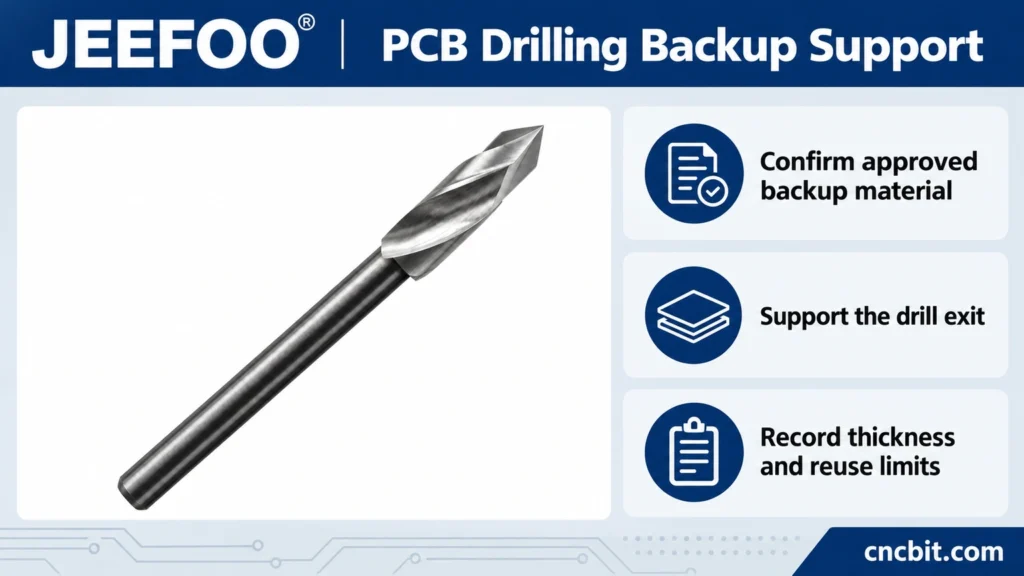
A PCB drilling backup board supports the underside of the work during drill breakthrough. Its material, condition, and contact with the PCB belong in the drilling setup record, especially when exit burrs or laminate damage appear.
Keep entry and backup materials distinct
Entry material sits above the drilled board or stack, while backup material sits below it. They occupy different positions and should be identified separately on the setup sheet. Record their product references, thicknesses, and approved reuse conditions. Do not substitute an available sheet simply because it fits the table. The appropriate combination depends on the drilled construction, tooling, and machine process.
Inspect the supporting surface
Before loading, check for obvious distortion, debris, damaged areas, and previous holes beneath the intended drilling pattern. Follow the qualified process for deciding whether a used sheet remains suitable. A backing surface needs to support the work where the drill exits; placing the board over a damaged area can change that condition. Check the board and backing arrangement together rather than examining each sheet in isolation.
Review depth and restraint as a system
Verify the programmed depth against the actual stack arrangement and the machine’s approved setup procedure. Include entry and backup layers when reviewing the travel and available clearance. Confirm that the intended operation will not reach the fixture or machine table. Review the pressure foot or other restraint and the extraction system where fitted. UNION TOOL’s drilling guidance notes that entry and backup material, pressure-foot operation, and vacuum performance can affect drilling quality.
Compare exit quality without hiding other causes
Inspect both entry and exit faces, and identify the drill history and board position in the stack. If a fresh backing sheet is being evaluated, hold other variables constant where practical and retain labelled samples. A better result provides evidence for that setup; it does not establish a universal backing specification. Tool wear, movement, and the drilling conditions also deserve review. For a JEEFOO® tool enquiry, send the complete stack description rather than only a photograph of the burr. Include the backing material reference in repeat-job instructions so purchasing changes do not enter the process unnoticed.