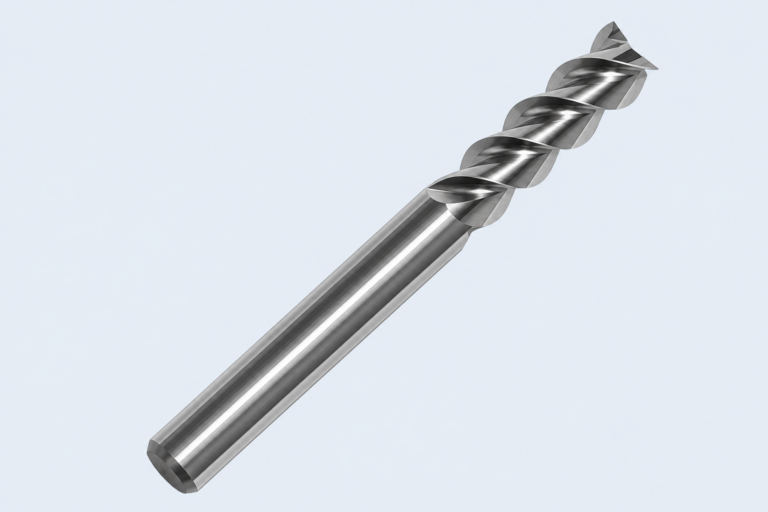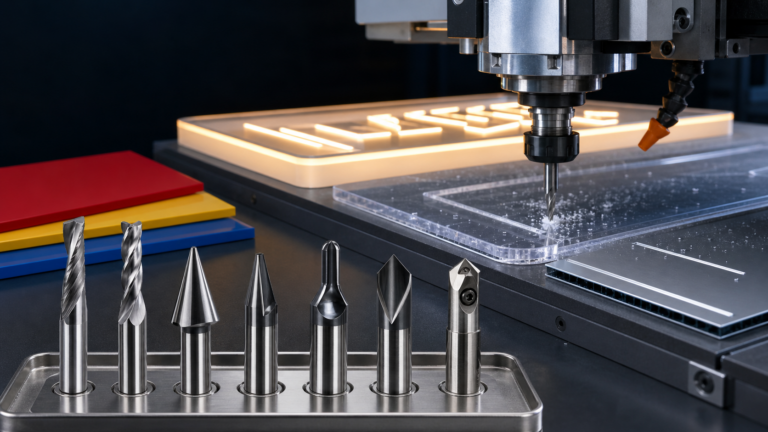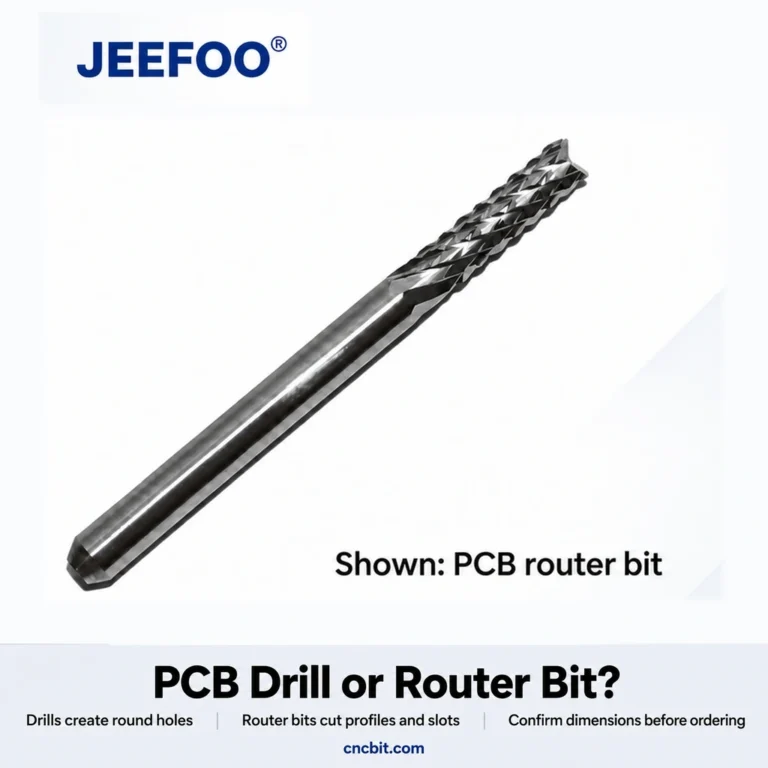
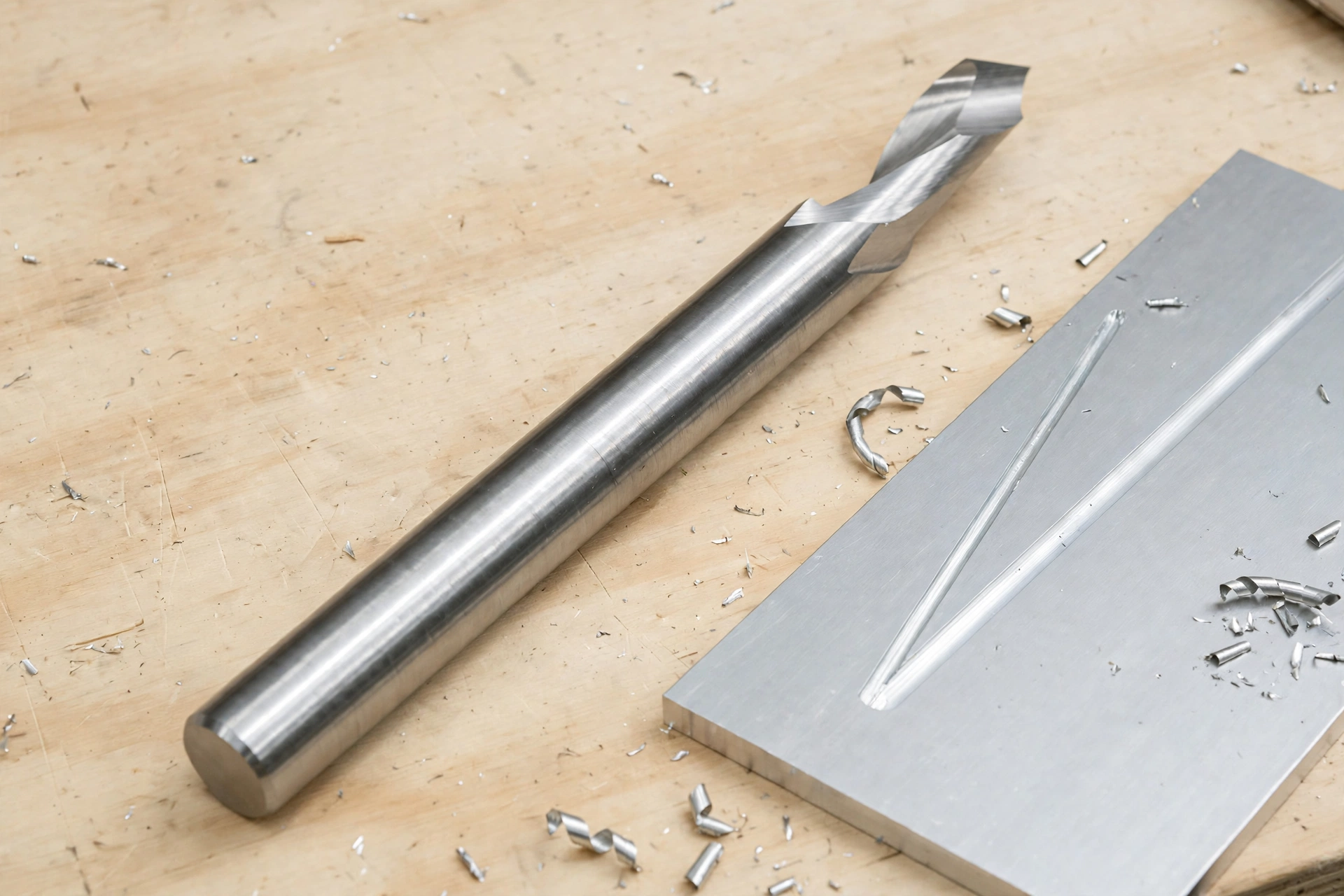
The LH 8x90D is listed on cncbit.com as a PCD grooving cutter for aluminum, with applications including V-profile machining and panel routing. Its supplier description identifies precision-ground cutting edges.[1] Understanding that edge requires looking at the diamond material as well as the groove profile it produces.
PCD describes a family of manufactured cutting materials. It does not specify one grain structure or one finished-edge condition. For an aluminum groove, those distinctions matter because the prepared edge creates the surface, while the material behind that edge must withstand continued cutting.
How separate grains become a cutting material
Hyperion describes its PCD production as consolidating micronized diamond at high pressure and temperature in the presence of a catalytic metal binder. The diamond powder is manufactured with controlled particle sizes, shapes and surface properties.[2] The resulting material contains many joined diamond grains rather than a single crystal.
For a PCD grooving cutter, grain size consequently describes part of the internal material structure. It is not the same property as the cutter’s profile, the radius of its prepared edge or the roughness left on an aluminum surface. Those quantities cannot be obtained simply by assigning the grain-size number to another feature.
Fine grains and a sharp prepared edge for a PCD grooving cutter
Hyperion’s Compax SE description combines fine grains with uniform diamond distribution and strong diamond-to-diamond bonding. The manufacturer connects that combination with sharp-edge milling and demanding finish applications.[5] The useful connection is between an engineered microstructure and the edge it can support, rather than a promise attached to the word “fine”.
Nor does fine grain automatically mean that toughness has been sacrificed. Sumitomo describes its ultra-fine-grained, high-density DA1000 material in terms of edge sharpness, wear resistance and fracture resistance together.[4] That is a specific grade description. It does not establish that every fine-grained PCD has those properties, and it does not support assuming that grain size alone determines the sharpness–toughness balance.
A second route: combining grain populations
Some PCD grades use a bimodal structure, with two grain-size populations. Hyperion identifies this arrangement in Compax 1800P and associates it with increased diamond content and high abrasion resistance.[3] A description reduced to only “coarse” or “fine” would lose information about that distribution.
Sumitomo also connects its coarse-grained DA1090 material with high-density sintering and enhanced particle binding.[4] Taken together, these examples show why the connections among particles and their arrangement belong in the explanation. Grain size is one characteristic of the material; density, distribution and bonding also appear in the manufacturers’ accounts of performance.
The manufactured material still needs an edge
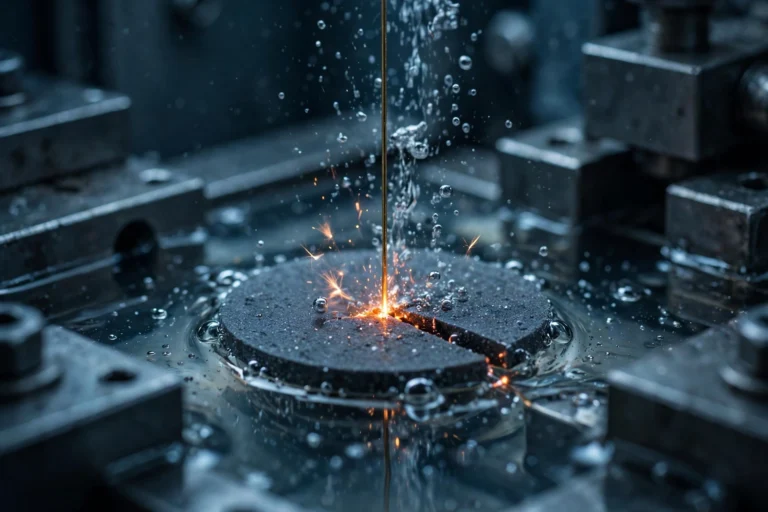
For a PCD grooving cutter, producing a PCD blank and preparing its cutting edge are separate manufacturing stages. Hyperion makes that distinction explicit for another fine-grained grade, 1200P: its application description includes acceptance of an edge prepared by wire electrical discharge machining.[3] A grade’s surface-finish application therefore comes with an edge-preparation context, not just a particle-size description.
For the LH application, the supplier’s statement that the edge is precision-ground identifies that preparation in general terms. It does not establish the grade used, its grain distribution or a measured edge radius. None of the Hyperion or Sumitomo examples above identifies the material supplied in this LH cutter.
The practical selection question is how the actual PCD grade and prepared edge work together for the required groove surface and cutting conditions. Choosing the smallest advertised grain size alone leaves part of that question unanswered. The available LH page supplies the product role; a grade-specific explanation and the actual prepared edge provide the next level of material understanding, without borrowing another manufacturer’s finish or tool-life claim.
Sources checked on 5 November 2026: [1] cncbit.com, LH 8x90D product listing; [2] Hyperion, Compax Overview; [3] Hyperion, Benefits of Compax; [4] Sumitomo Electric Hardmetal, Grades Selection, non-ferrous-metal PCD section; [5] Hyperion, introduction of Compax2.0 SE.