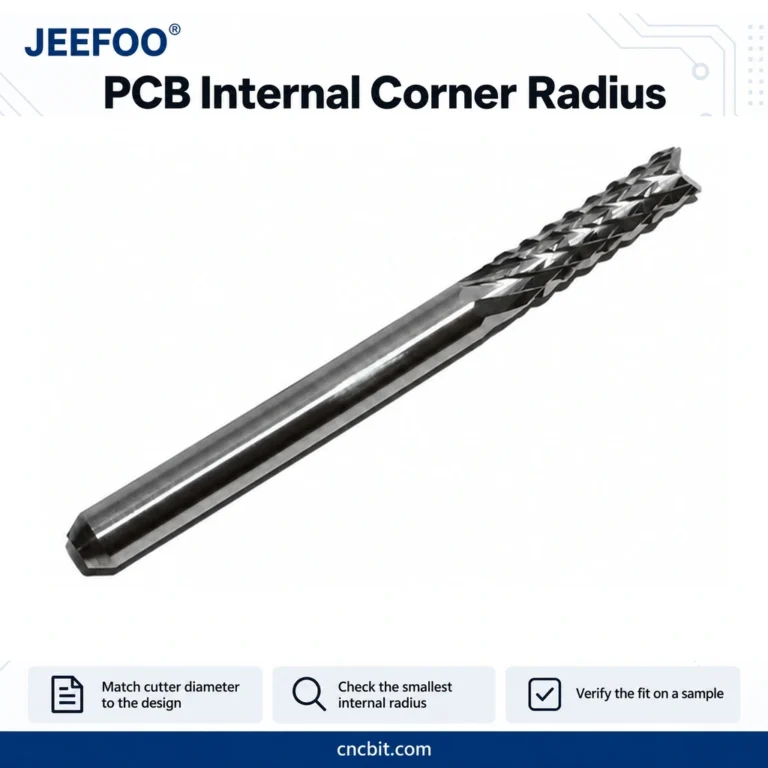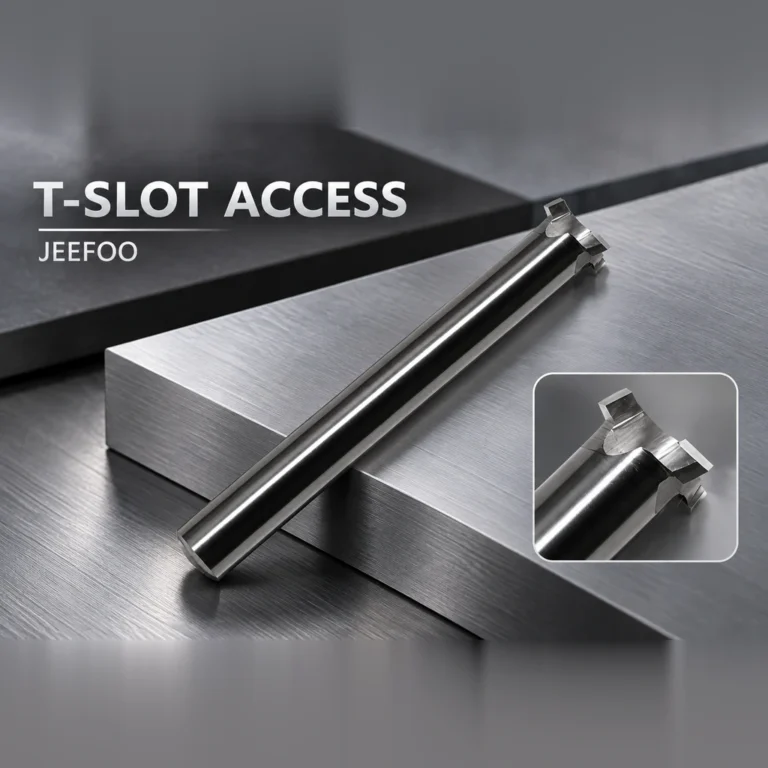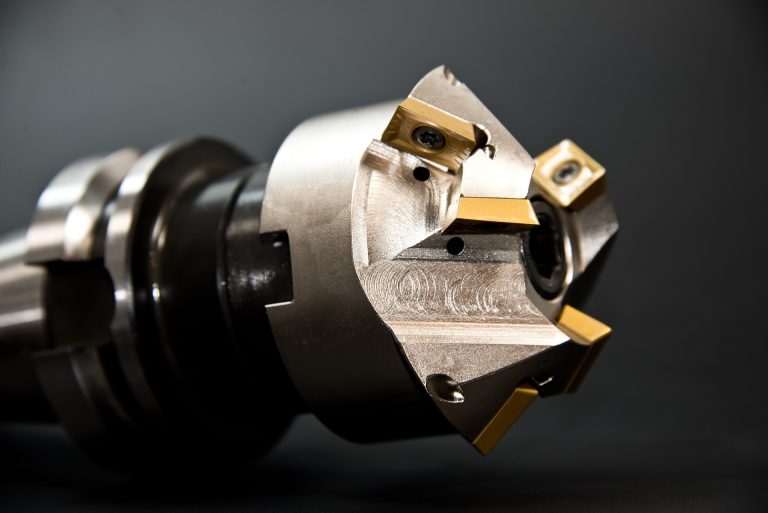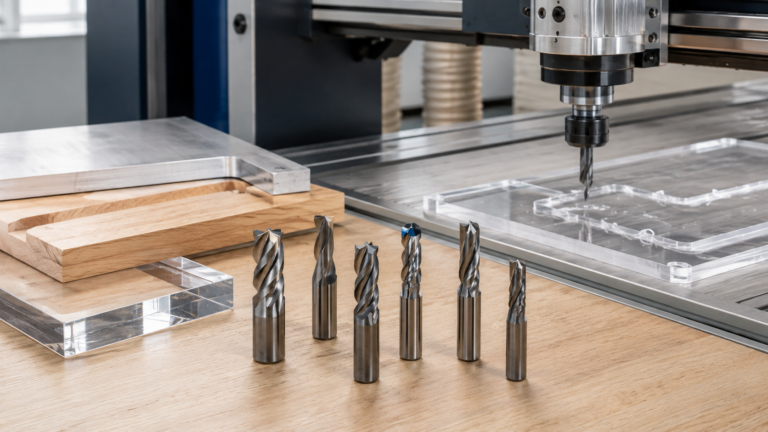
PCD EDM conductivity: The WY straight bit on cncbit.com has a polycrystalline diamond cutting edge for routing, grooving, trimming and sizing compatible engineered wood panels.[1] Its hard working edge raises a manufacturing question: how can a toolmaker shape diamond using electrical discharge machining, or EDM, when the diamond grains themselves do not conduct electricity?
The answer concerns the composite material and the surface presented to the discharge. It does not establish how this particular WY cutter was manufactured. Its published description supplies neither a PCD grade nor an EDM production route.
PCD EDM conductivity belongs to the composite
Conventional metal-bonded PCD combines diamond with a metallic phase. In their original study, Minami and colleagues explain that a binder such as cobalt or nickel permits electrical conduction, whereas the diamond grains are nonconductive.[3] Treating the entire composite as electrically identical to one constituent would therefore give the wrong starting point.
UNITED GRINDING likewise identifies cobalt-containing PCD as a material that can be shaped by erosion. Its manufacturing account describes electrical removal as a useful route when taking substantial amounts from this difficult-to-grind material.[2] Hardness explains why preparation is demanding; electrical access explains why this different removal process is available. These are different material properties serving different parts of the explanation.
The working surface changes during removal
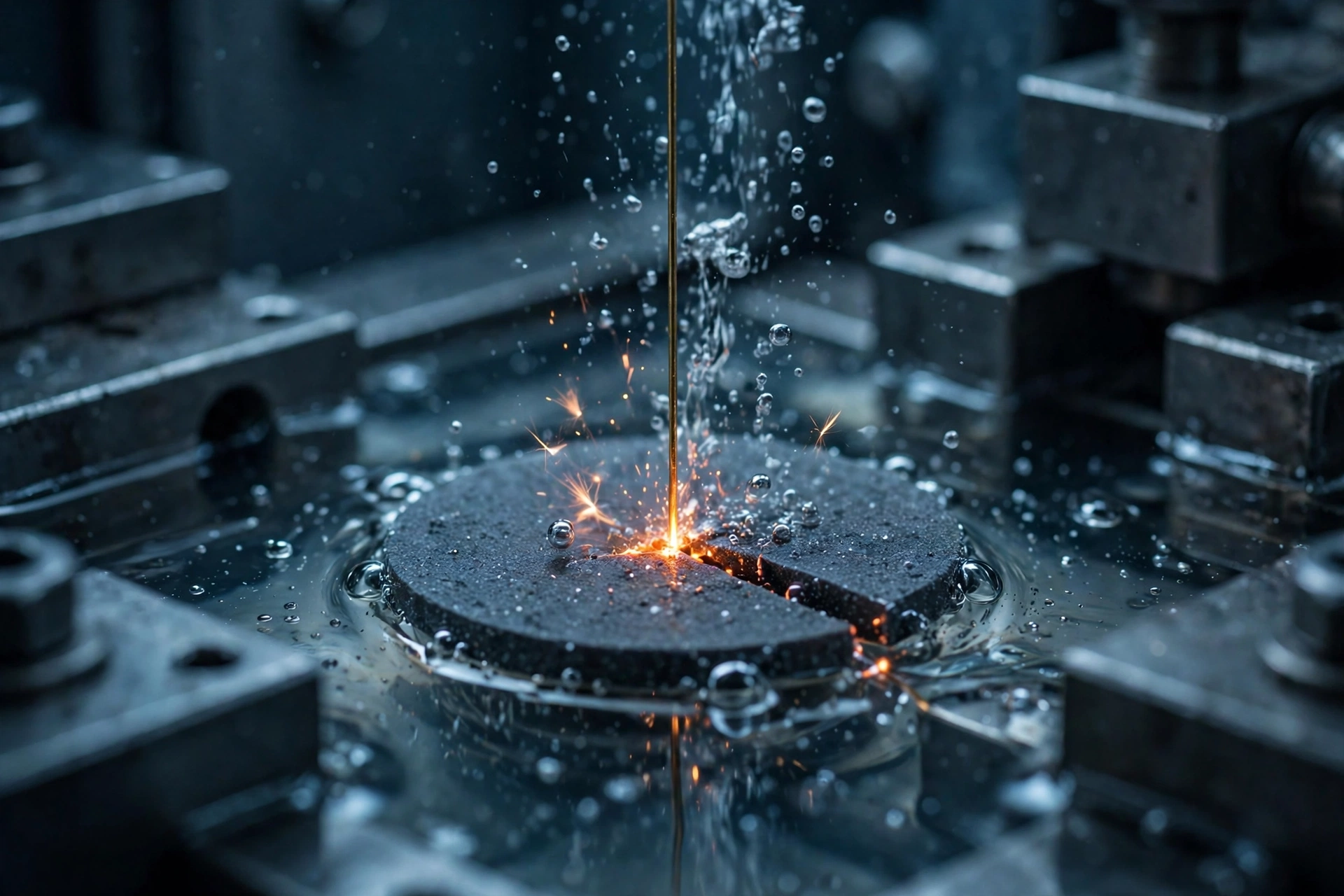
Initial conductivity does not mean every newly exposed region will behave the same way. The 2021 study describes a negative-PCD-polarity condition in which removing metallic binder leaves a surface without the conductivity needed to sustain discharge. With relatively large diamond grains, machining can then cease.[3] This is a bounded explanation of a process condition, not a statement that all PCD erosion inevitably stops.
The researchers also discuss deposits derived from machining oil and transferred electrode material. Such deposits can provide electrical access over nonconductive diamond, while excessive accumulation can impede net removal. A conductive surface layer can therefore assist access without guaranteeing efficient shaping. For PCD EDM conductivity, their investigation of alternating polarity addresses this changing surface; it is not a universal setting instruction for a woodworking cutter.[3]
Different regions can require different processes
A finished cutter contains more than its working edge. UNITED GRINDING describes tools with PCD elements supported by carbide or high-speed-steel bodies. Its combined machines can erode the PCD and grind the supporting material while retaining the same clamping.[2] The relevant principle is allocation: a suitable removal process for one region need not be the preferred process for the adjoining region.
In PCD EDM conductivity, this helps explain why “made with PCD” does not name an entire manufacturing sequence. Material selection, shaping the diamond region and finishing the other tool surfaces remain distinguishable operations. The example concerns the machine manufacturer’s described constructions; it does not disclose the body material or assembly of WY.
Actual service evidence has a defined scope
Hyperion’s own PCD cut-tip service lists both wire EDM and laser processing.[4] That is a concrete example of specialised manufacturers producing shaped PCD elements, rather than diamond tooling being impossible to form once consolidated. The service description does not identify Hyperion as WY’s material supplier or establish that it accepts a complete used WY cutter for reconditioning.
For the WY application, the catalogue establishes the edge material and woodworking role. For PCD EDM conductivity, the electrical explanation resolves how a metal-bonded diamond composite can be shaped; it leaves the actual product’s manufacturing history open. A proposal to recondition a particular cutter still needs its construction and remaining geometry assessed. Neither the word PCD nor the existence of an EDM service supplies that assessment.
PCD EDM conductivity — Sources checked 5 November 2026: [1] cncbit.com, WY PCD Straight Bit. [2] UNITED GRINDING, 9 July 2021 manufacturing article. [3] Minami, Watanabe and Masui, International Journal of Electrical Machining 26 (2021), relevant introduction, experimental-material and surface-mechanism passages. [4] Hyperion, Cutting Service. No WY machining experiment or process approval is claimed.