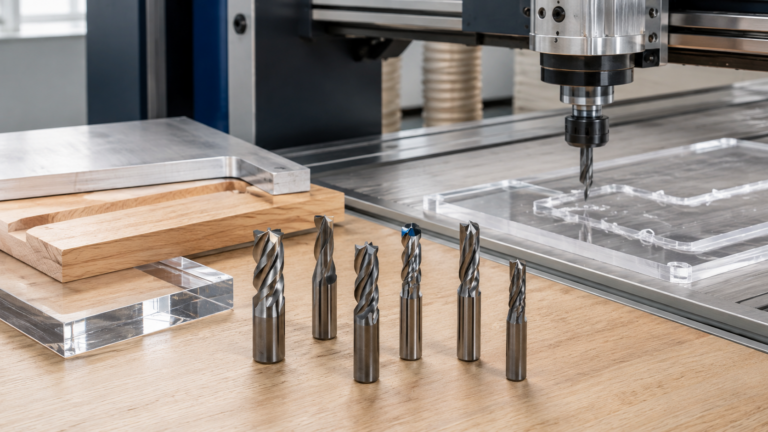
PCB micro tool handling connects purchasing, receiving inspection, storage, and machining. Each handoff needs to preserve the tool’s identity and condition. For small cutters, a documented supply chain is useful only when the correct, undamaged tool actually reaches the spindle.
The label connects purchasing to production
Compare the package label with the purchase order and approved tool reference. Confirm the stated cutting diameter, shank diameter, flute length, quantity, and any other ordered feature using the supplier’s documentation. Do not use a colour ring or visual resemblance as the only identification method. Photograph damaged packaging and keep the delivery details available if a discrepancy needs to be raised. Separate unverified stock until the issue is resolved.
Inspection needs defined limits
Open cases on a clean, stable surface where a dropped item can be found without reaching into machinery. Follow the supplier’s handling method and avoid contact with the cutting end. Use appropriate magnification to look for obvious chipping, contamination, or damage. An incoming visual check cannot establish every dimensional or performance requirement; use the agreed inspection method where a measured characteristic is required. Never test sharpness with a finger.
Storage preserves identity as well as edges
Store tools in protective holders or cases that prevent cutting edges from contacting neighbouring tools. Retain the product and batch identification where provided. Create clearly separated locations for new, used, awaiting inspection, and rejected items. If tools are issued individually, transfer their identification to the job record before removing them from the labelled case. This makes a later quality investigation more useful than a drawer containing mixed, anonymous cutters.
The machine handoff closes the loop
Before installation, confirm that the selected tool matches the current program and setup sheet. Inspect and prepare the holder according to the machine manufacturer’s instructions, and use the specified clamping method. Handle tool changes only with the machine in the required safe state. Record any dropped or suspect tool for assessment rather than quietly returning it to fresh stock. When reporting an issue with a JEEFOO® PCB tool, include its label, photographs, and receiving or use history. Review returned tools at the end of the job while their operating history is still available to the team.
PCB tool quality continues beyond the supplier’s dispatch inspection. Protected storage, clear acceptance checks, and traceable handoffs help turn an approved purchase into a repeatable production input.