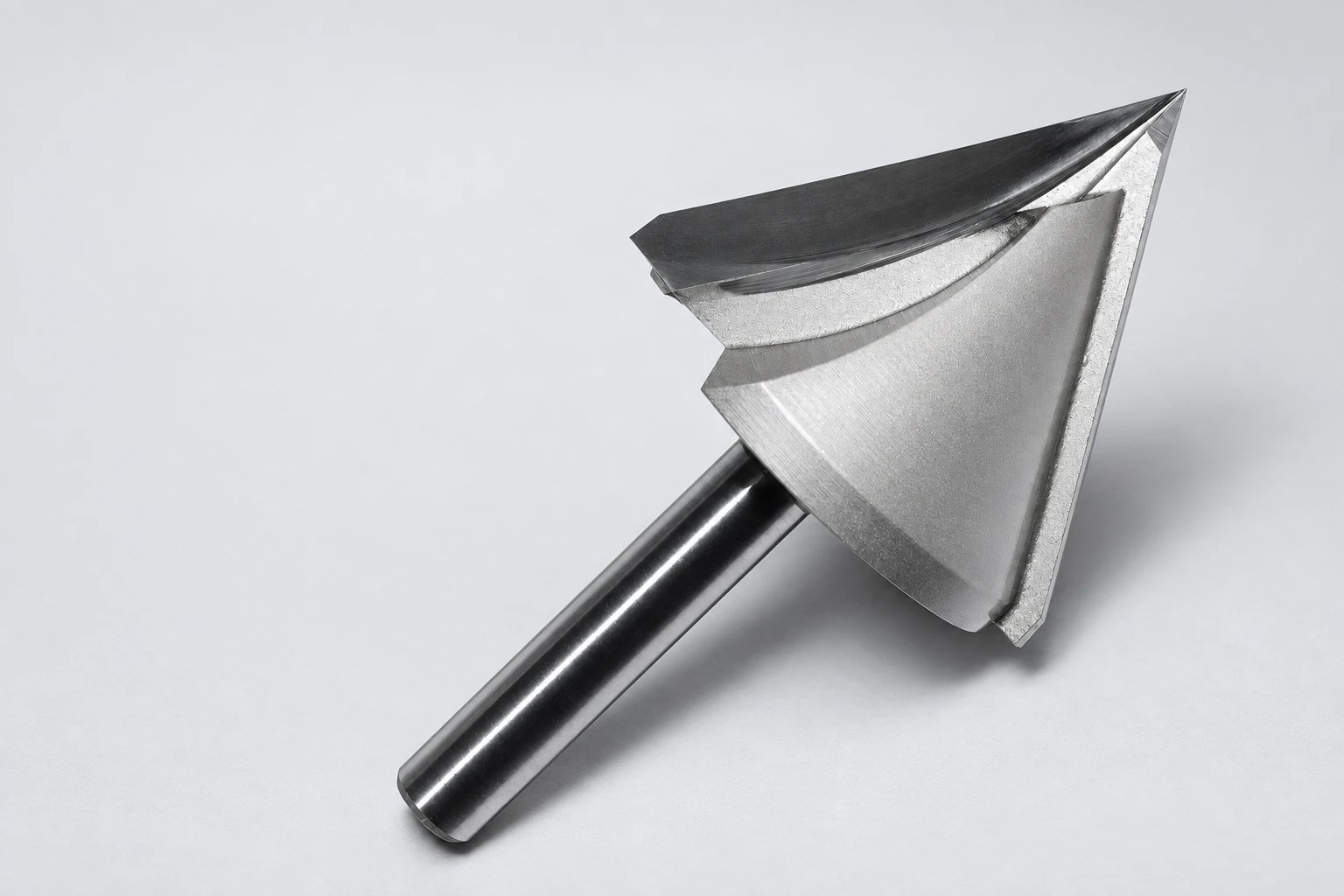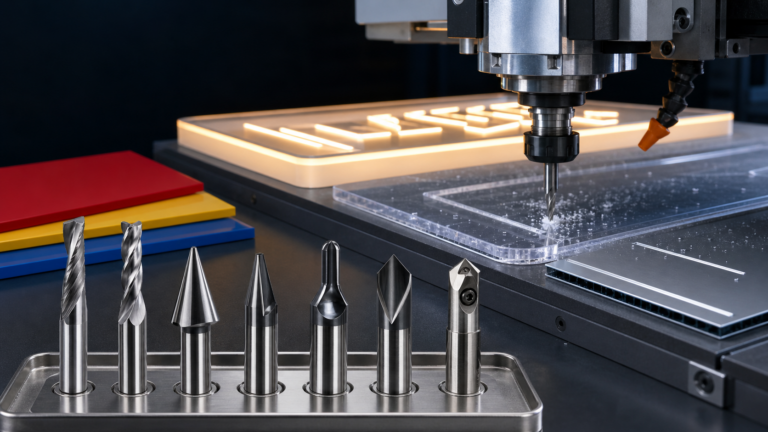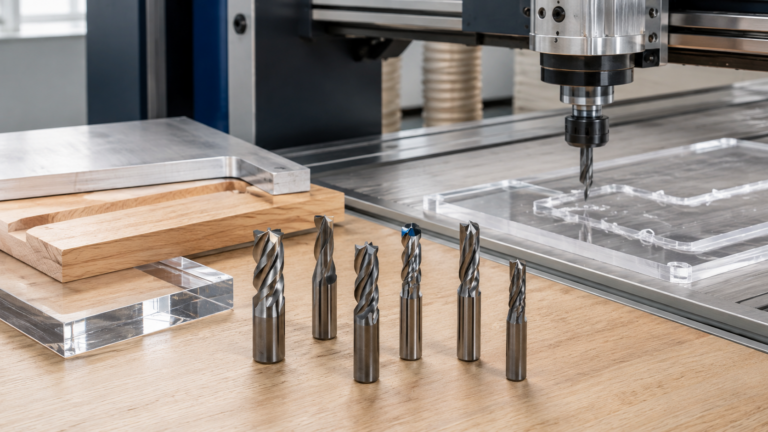
The 3DV carving knife, also known as the 3D V-shaped large head knife, is a commonly used tool in CNC carving processing. With its unique tapered flat bottom structure, it is mainly used for 3D corner cleaning, 3D V-shaped carving, plaque modeling, slope chamfering, V-shaped groove forming and other processes of non-metallic materials such as density board, solid wood, acrylic, PVC, etc. It can process smooth and three-dimensional slope effects in one go and is widely used in advertising carving, woodworking decoration, craft production and other fields. To ensure machining accuracy, finished product quality, and tool lifespan, it is necessary to strictly follow standardized usage procedures and operate every machining step in a standardized manner.
The preparation inspection before machining is the foundation for ensuring the quality of carving, and the primary task is to check the condition of the cutting tools. Before use, it is necessary to carefully observe the blade, tip, and overall tool, check whether there are any problems such as chipping, gaps, coating peeling, etc., and whether the flat bottom of the tip is intact. Once the tool is damaged, it should be replaced immediately to avoid problems such as rough edges, uneven depth, and local burning of the workpiece. At the same time, it is necessary to accurately confirm the specifications of the tool, including the diameter of the tool holder, the full angle of the tool (60 °, 90 °, 120 ° are commonly used specifications), the maximum blade width, and the flat bottom width of the tool tip. The subsequent software parameter settings must be completely matched with the actual parameters of the tool, which is the core prerequisite for avoiding overcutting and machining failure.
Tool clamping and workpiece fixation are equally crucial. Before installing the tool, it is necessary to clean the dust and debris inside the ER chuck to ensure that the clamping surface is clean and free of debris. During clamping, the clamping length of the tool holder should not be less than 15 millimeters, and it is strictly prohibited to clamp the blade area. The locking force should be moderate to prevent the tool from slipping or shifting during processing. After completing the tool installation, it is necessary to check the concentricity of the tool. Concentricity deviation can cause problems such as tool vibration, burning, and rapid tool wear. Before processing the workpiece, it should be placed flat and firmly fixed by vacuum suction or pressure plate to ensure that the board fits the carving table without looseness or curling. At the same time, residual wood chips and debris on the table should be cleaned to avoid affecting the flatness and processing accuracy of the workpiece. Finally, precise tool alignment is completed, with the Z-axis aligned with the material surface. After replacing the tool, it must be re aligned to lock the XY axis workpiece reference point and ensure the accuracy of the machining origin.
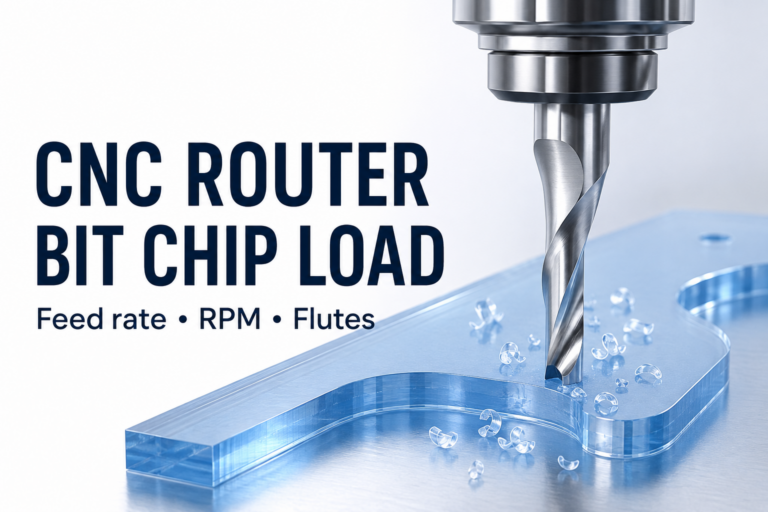
The setting of software tool path parameters is the core link in the use of 3DV carving knives. Unlike ordinary single line carving, this tool must use a 3D corner cleaning processing path and be compatible with mainstream carving software such as precision carving, Wentai, VCarve, etc. When entering parameters, strictly follow the actual data of the tool to fill in the full angle, maximum blade width, and flat bottom width of the tool tip. Remember that the carving depth is limited by the tool blade width. The deeper the depth, the larger the V-groove opening width. It is strictly prohibited to set the machining depth beyond the tool limit blade width. The processing parameters need to be reasonably adapted. When machining density boards with a conventional 6mm handle 90 ° 3DV knife, the spindle speed is set to 18000 to 24000 rpm, the feed rate is controlled at 1500 to 3000 mm/min, and the feed rate of the lower blade is adjusted to 500 to 1000 mm/min. Solid wood processing requires appropriate reduction of feed rate, acrylic material needs to reduce speed and cooperate with air cooling to prevent material melting and sticking to the blade, and hard non-metallic materials need to be cut in layers to prevent deep carving with one cut. At the same time, the oblique downward cutting mode is selected to avoid the problem of sharp chipping caused by vertical thrusting. The precision machining step distance is controlled at 0.05 to 0.1 millimeters to ensure smooth and wrinkle free inclined surfaces. The machining path follows the principle of first inside and then outside, and small characters are prioritized to avoid secondary scratching of the finished product surface. After parameter settings are completed, simulation preview must be conducted to investigate issues such as overcutting and stroke exceeding limits.
The practical operation on the machine needs to follow the standardized process. After the simulation is correct, the machining tool path should be output. First, the Z-axis should be raised for idle testing to verify the XY axis stroke and confirm that there is no risk of tool collision. Turn on dust removal or air cooling equipment throughout the processing process to promptly remove cutting wood chips and dust, prevent debris accumulation, friction, and heat generation, which can cause the workpiece to burn black and the blade to stick. Before formal processing, priority should be given to using waste materials of the same material for trial carving, checking the flatness of the V-groove slope, carving depth, and edge burrs. Adjust the speed and feed parameters according to the trial carving effect, and only proceed with batch processing after meeting the standards. During the machining process, observe the operation status of the equipment throughout the entire process. A uniform and light cutting sound is considered normal. If there is any sharp vibration or abnormal noise shaking the tool, the equipment should be immediately suspended, and problems such as tool clamping, plate fixation, and parameter settings should be investigated. After adjustment, continue machining. During machining, it is strictly forbidden to approach high-speed rotating tools with limbs to ensure operational safety.
Processing finishing and daily maintenance cannot be ignored. After the carving is completed, first lift the Z-axis to a safe height, then stop the spindle operation, and wait for the spindle to come to a complete stop before disassembling the workpiece. The slight burrs remaining on the surface of the workpiece can be lightly polished and trimmed with fine sandpaper along the material texture to enhance the texture of the finished product. At the same time, it is important to remember the taboos of using cutting tools. 3DV carving knives are only suitable for non-metallic materials and are strictly prohibited from processing hard materials such as metal and stone; Not suitable for large-area flat milling, only for V-shaped forming and 3D corner cleaning special processes; Eliminate high-speed cutting and ultra large cutting capacity processing to prevent tool breakage and damage. Timely clean the blade debris after daily use, store the tools properly, avoid blade collision, regularly check the wear of the tools, and replace them in a timely manner when the wear is severe. This can not only ensure the stable quality of the carved products, but also effectively extend the service life of the tools and reduce processing costs.