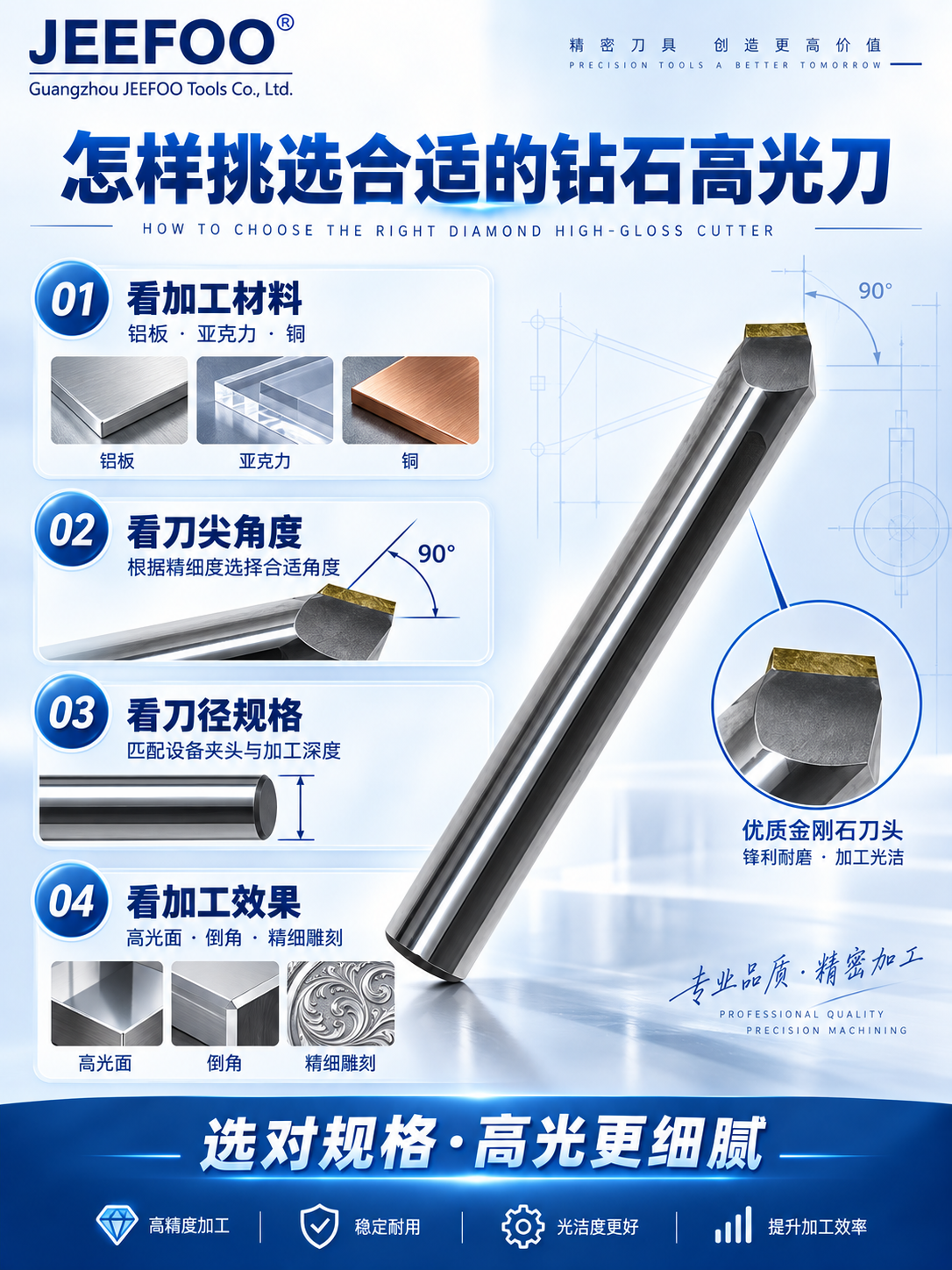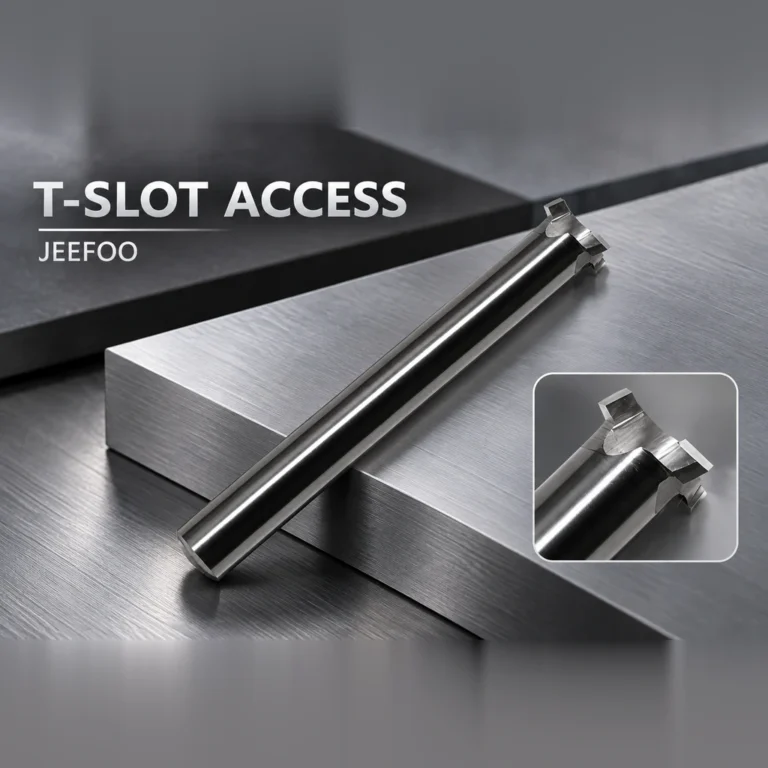
A diamond highlight knife is a cutting tool selected for bright decorative edges or precision finishing on compatible materials. Choosing one requires more than the word “diamond”: identify the cutting material, edge geometry, machine interface, and the surface acceptance requirement. A reflective appearance alone does not establish dimensional accuracy or an optical-grade finish.
1. Match the Diamond Highlight Knife to the Material
State the workpiece alloy or polymer grade, condition, and any coating or abrasive filler. Aluminum, copper, acrylic, and composites should not be treated as one machining category. Obtain application confirmation for the exact tool before selecting operating conditions.
Conventional diamond cutting tools are generally associated with non-ferrous and suitable non-metallic applications. Do not assume that diamond hardness makes a cutter suitable for steel or cast iron. Specialized processes require their own documented tooling and equipment; a general selection guide is not approval for them.
2. Confirm the Diamond Type and Edge Geometry
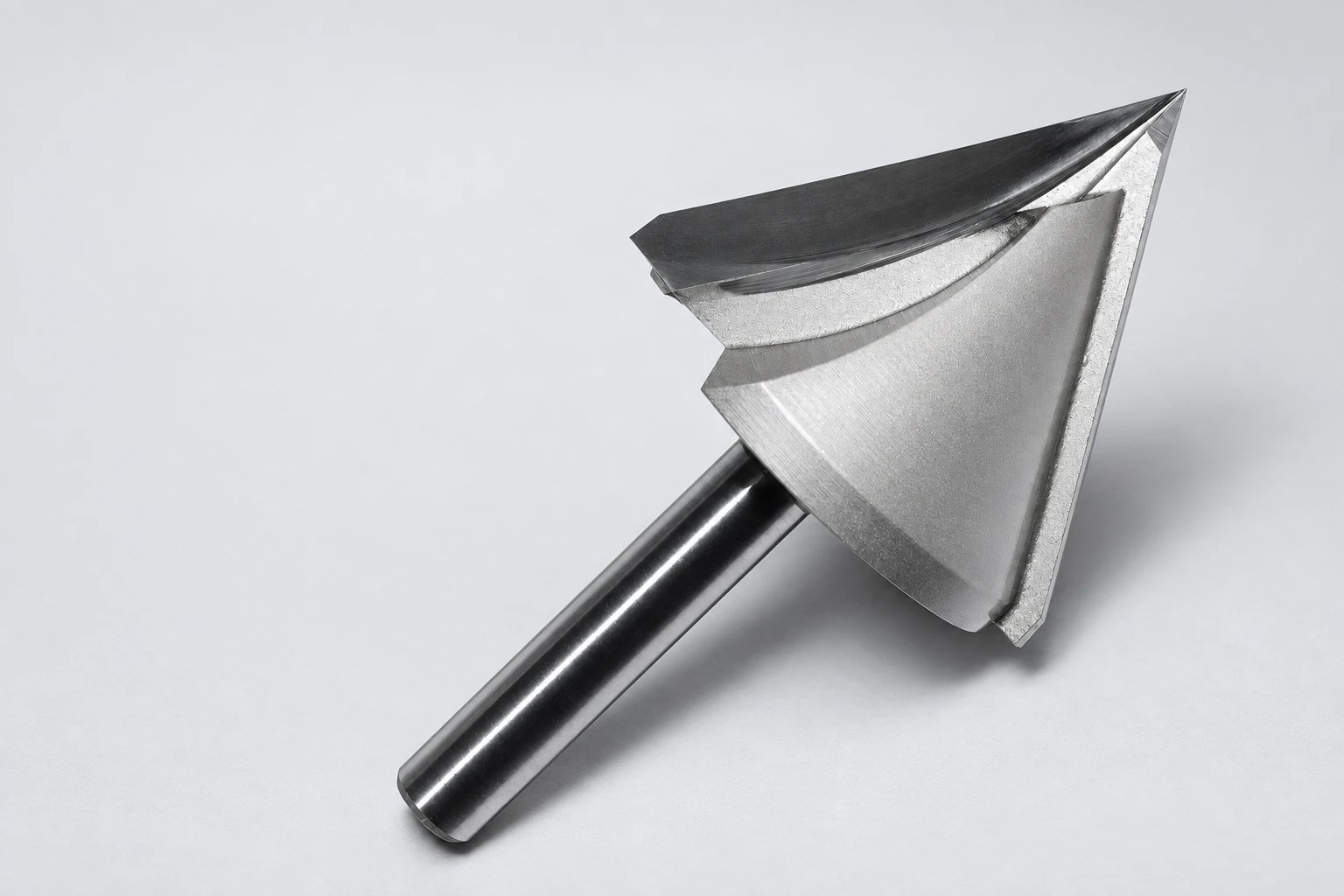
Ask whether the cutting edge is single-crystal diamond, polycrystalline diamond, a solid CVD diamond form, or a diamond coating on another substrate. These descriptions are not interchangeable. Request the actual product drawing and intended application rather than inferring performance from a photograph or a generic catalogue name.
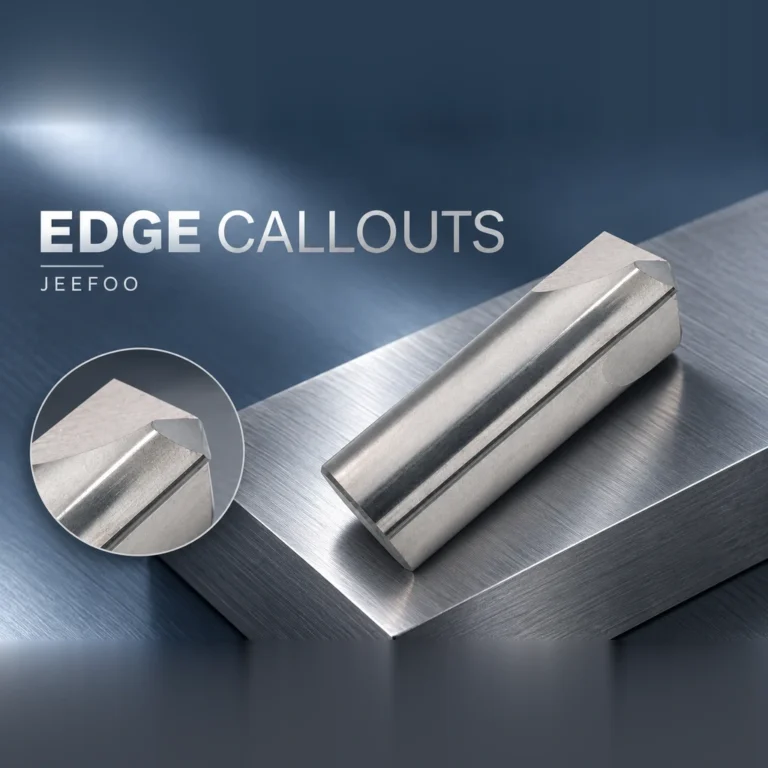
Check the cutting angle, edge width, tip or nose radius, cutting direction, shank size, and available reach. Clarify which angle is included and how it relates to the drawing. For a bright chamfer, define the finished width and angle, and identify edges that must remain untouched.
3. Define the Finish and Inspection Method
Provide a representative approved sample or a written surface requirement. Specify lighting and viewing direction when appearance is part of acceptance. If roughness is required, identify the roughness parameter, measurement method, and drawing limit rather than using “mirror finish” as a measurable number.
Keep appearance, edge dimensions, and form accuracy as separate checks. A glossy surface can still contain machining marks, local damage, or a dimension outside tolerance. Compare trial pieces using the same cleaning and inspection procedure, and retain photographs with the job record.
4. Check the Machine and Qualify a Trial
Review spindle and holder condition, tool projection, workholding, clearance, and runout using the equipment supplier’s procedure. Vibration or a damaged edge can undermine the result even when the nominal cutter geometry is suitable. Confirm compatible cooling and chip control for the material and tool.
Use the tool supplier’s starting conditions for the exact application, then qualify a representative trial. Record the material batch, tool reference, setup, program revision, and inspection result. Change one relevant factor at a time if the finish is inconsistent; do not promise a universal feed, speed, or tool-life improvement.
Diamond Highlight Knife: Quick Answers
Does a more expensive diamond grade guarantee a better finish?
No. The material, geometry, edge condition, machine stability, and process all matter. Compare tools against the same accepted part requirement and trial conditions.
What should accompany a tooling enquiry?
Send material identification, a dimensioned feature drawing, required finish, machine and holder details, and photographs of any existing defect. Request written confirmation of the proposed tool’s suitability.
For examples of material-specific finishing geometries, see Harvey Tool’s finishing tooling overview. For defining the edge before CAM, read our aluminum chamfer cutter guide. Examples from another manufacturer do not establish JEEFOO product specifications.
Select a diamond highlight knife against the material, feature, finish requirement, and machine setup. Keep the approved sample and inspection record with the tool reference so repeat orders use the same acceptance criteria.