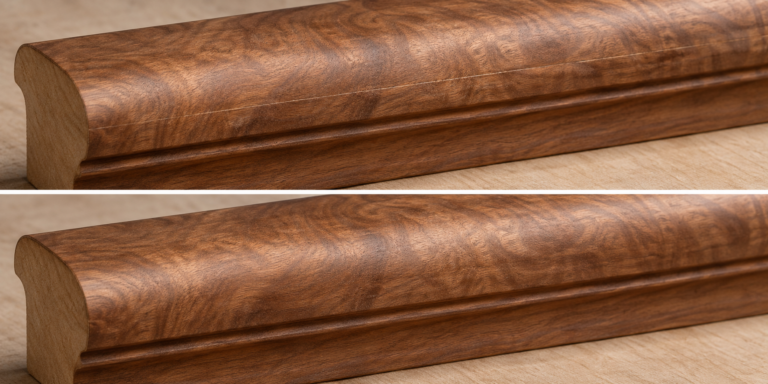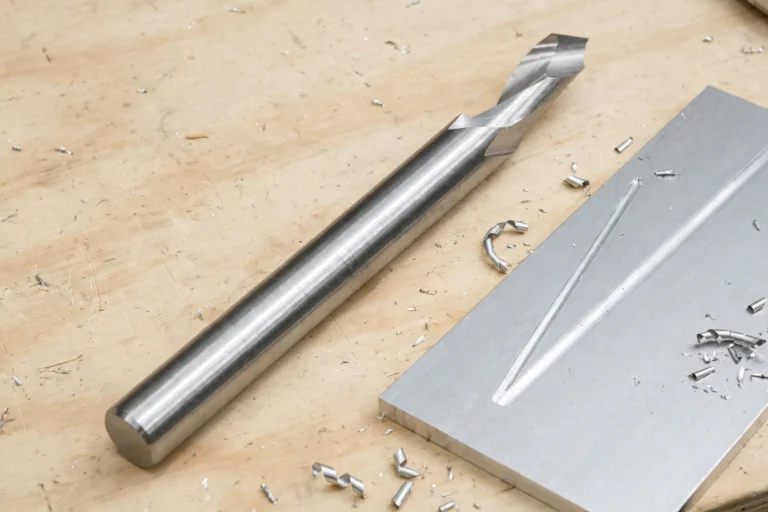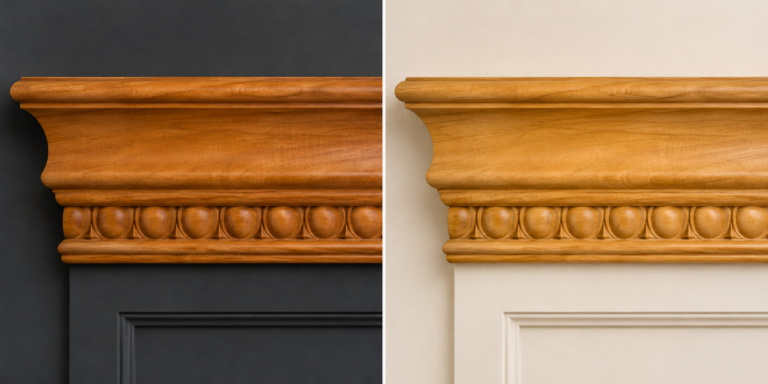
Set a wooden side block face up for milling. A GO 10×40 two-flute ball nose can cut a rounded groove across that face in compatible wood. Use the actual nose radius in CAM and check clearance for the shank at both ends of the groove. On the upright block, the groove runs horizontally below the top edge.
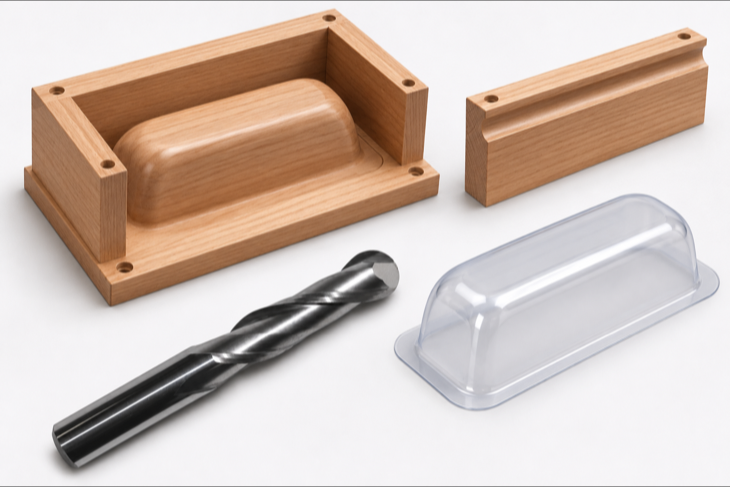
Section the assembled buck vertically through the groove. Suppose the plastic sheet conforms to the recess and the cooled cover has to lift straight up without flexing. Trace the inside profile of the cover on paper and slide it upwards on the section. The rib pointing inwards from the cover runs into the solid wood above the groove. A smooth ball-milled surface still leaves that obstruction in its path.
Formech illustrates a forming tool that comes apart to free an undercut. On this drawing, try taking out a centre block through the open base first. Show how far the grooved side block can then move inwards before the cover lifts. If those movements interfere, the split needs another layout.
Where would the joint appear on the cover? Ray Products notes that a moving tool section can leave a witness line. Mark that joint on the appearance drawing for approval before releasing the GO finishing path for the side block.
Sources
Related reading: Why a Ball-Nose Finishing Pass Still Encounters Heavy Stock