Down-Cut Router Bits: Check Both Panel Faces
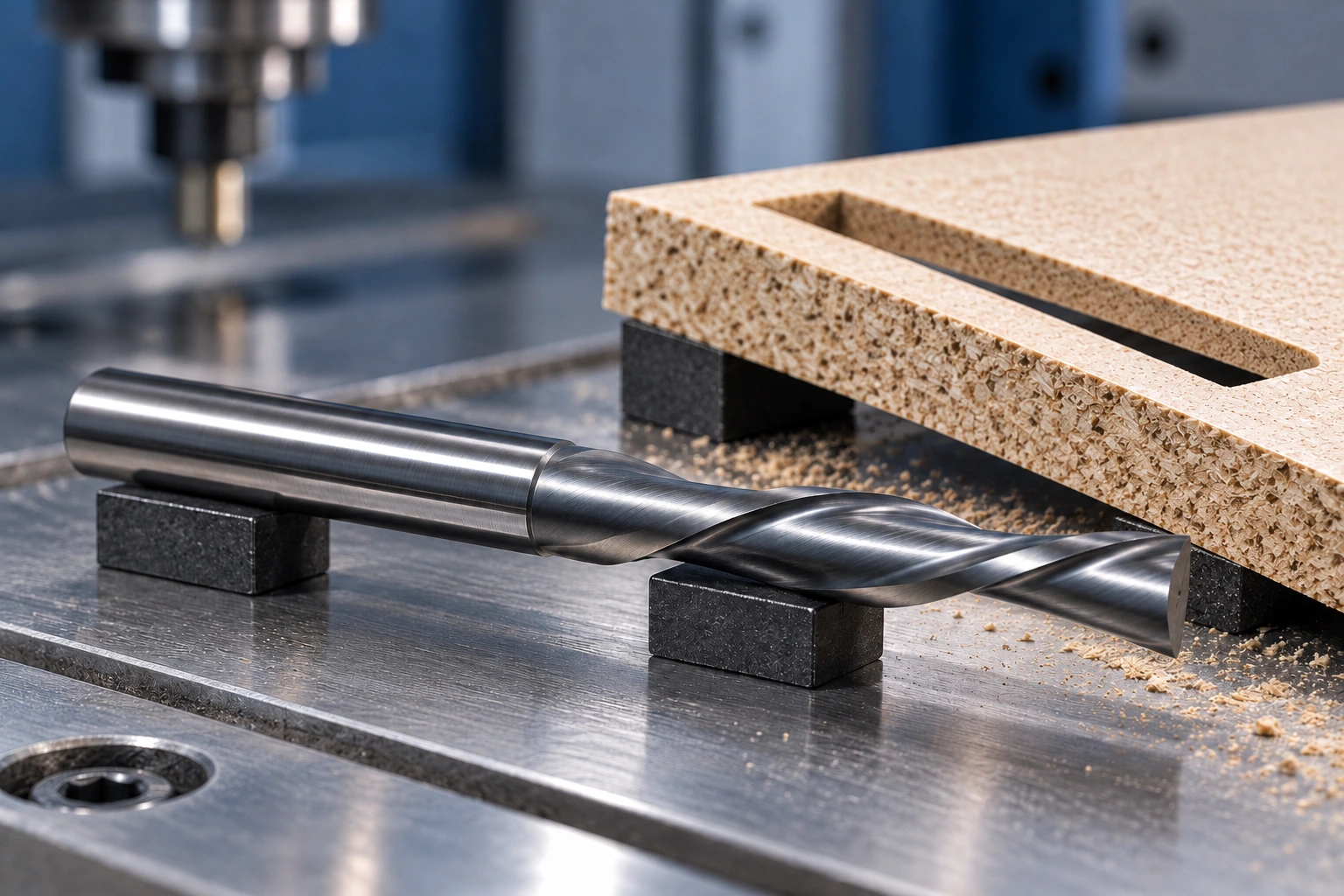
Are down-cut router bits suitable for a panel whose top and bottom edges both matter? The answer needs a through-cut trial against the complete edge specification. JEEFOO lists the GR 6×22 two-flute down-cut cutter for sheet routing where the top surface needs attention, with a 6 mm cutting diameter and 22 mm cutting length. Those details identify the tool; they do not guarantee identical results on the upper face, lower face and cut wall.
Use a panel coupon with the production layer structure
Prepare a trial coupon that represents the actual panel rather than a convenient substitute with a different facing or core. Identify the top and bottom faces and the edge areas to inspect before machining. Keeping the material structure visible in the record makes the tool assessment relevant to the intended through-cutting job, rather than to sheet materials in general.
Check the support and exit condition
Review the support beneath the cut and confirm how the final part remains restrained as the path completes. This should be part of the approved process rather than an improvised response at the machine. Downward chip movement also makes evacuation an important consideration. Choose conditions suitable for the cutter, material and equipment; there is no universal setting established by the series name.
Record three views of the edge
Inspect the upper edge, the cut wall and the underside after the machine has stopped safely. Use consistent lighting and the drawing’s measurement requirements. Note localized differences at corners or the path completion area. Keep handling damage separate from machining observations, and protect the coupon after inspection so it remains a useful reference.
Approve the application, not a general claim
An accepted test supports the documented combination of tool, panel, support and process. It does not establish that every material will produce the same edge. When purchasing a replacement, verify the same geometry and required dimensions. If the material or setup changes, repeat the relevant checks rather than relying only on the earlier photograph of a clean top face.
Summary
Assess a down-cut through-cut operation from both faces and along the wall. Approve a documented setup rather than an unqualified clean-edge promise.
Down-Cut Router Bits: Quick Answers
Does a clean top edge mean the panel passes inspection?
No. Inspect the top edge, underside, and cut wall separately against the drawing. A good result on one face does not establish that the bottom edge, dimensions, or local corners meet the same acceptance limits.
Why does chip clearance matter during a through-cut?
Down-cut geometry directs chips downward, so assess the available clearance and support beneath the cutting path. Check for retained or recut chips during the approved trial. Do not improvise changes to the support or hold-down system while the machine is running.
What should be recorded before approving production?
Record panel grade and thickness, facing and core structure, tool reference and dimensions, support, hold-down method, program revision, operating conditions, and photographs of all three edge views. Recheck the trial when a relevant material or setup detail changes.
For independent context, LMT Onsrud’s The Router Way discusses spiral direction and chip evacuation. Use the actual JEEFOO cutter and machine instructions for operating values. Our carving tool instructions cover general installation, trial, and storage checks.