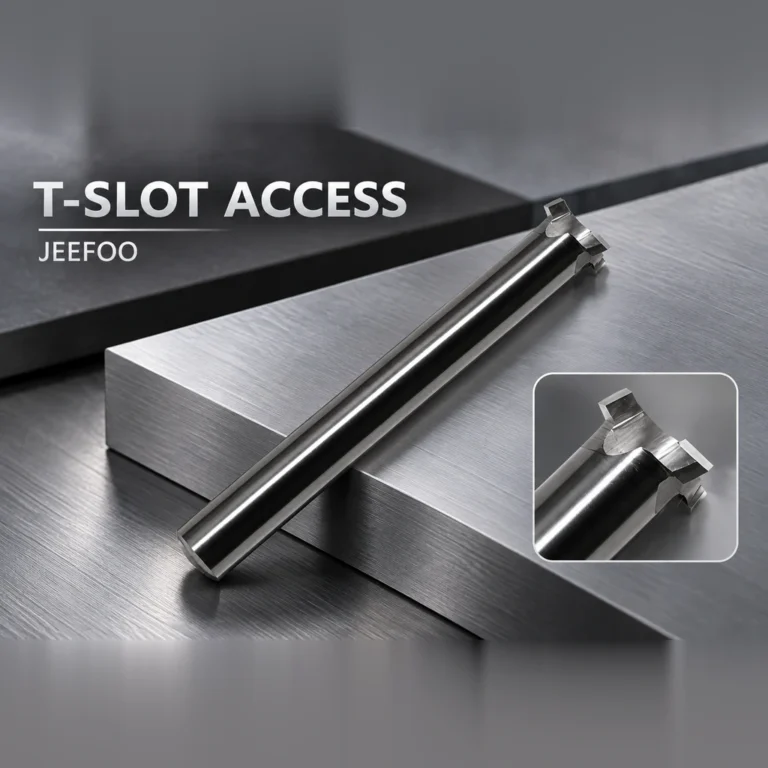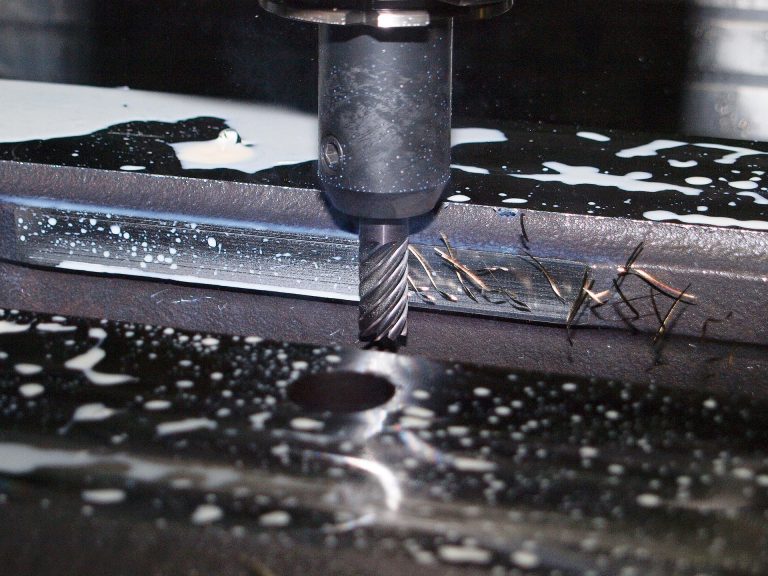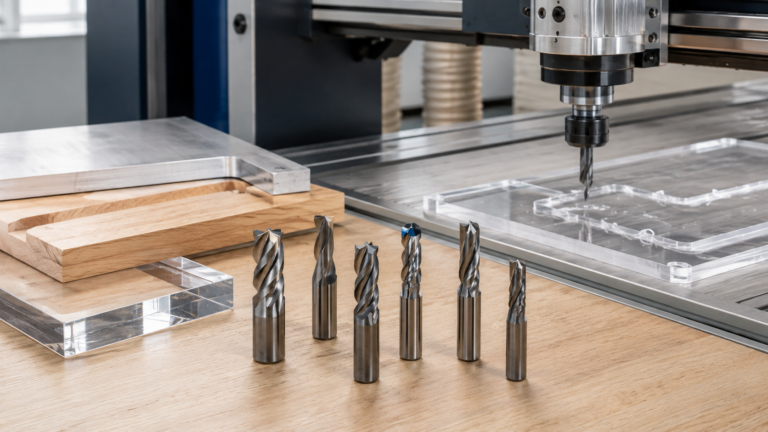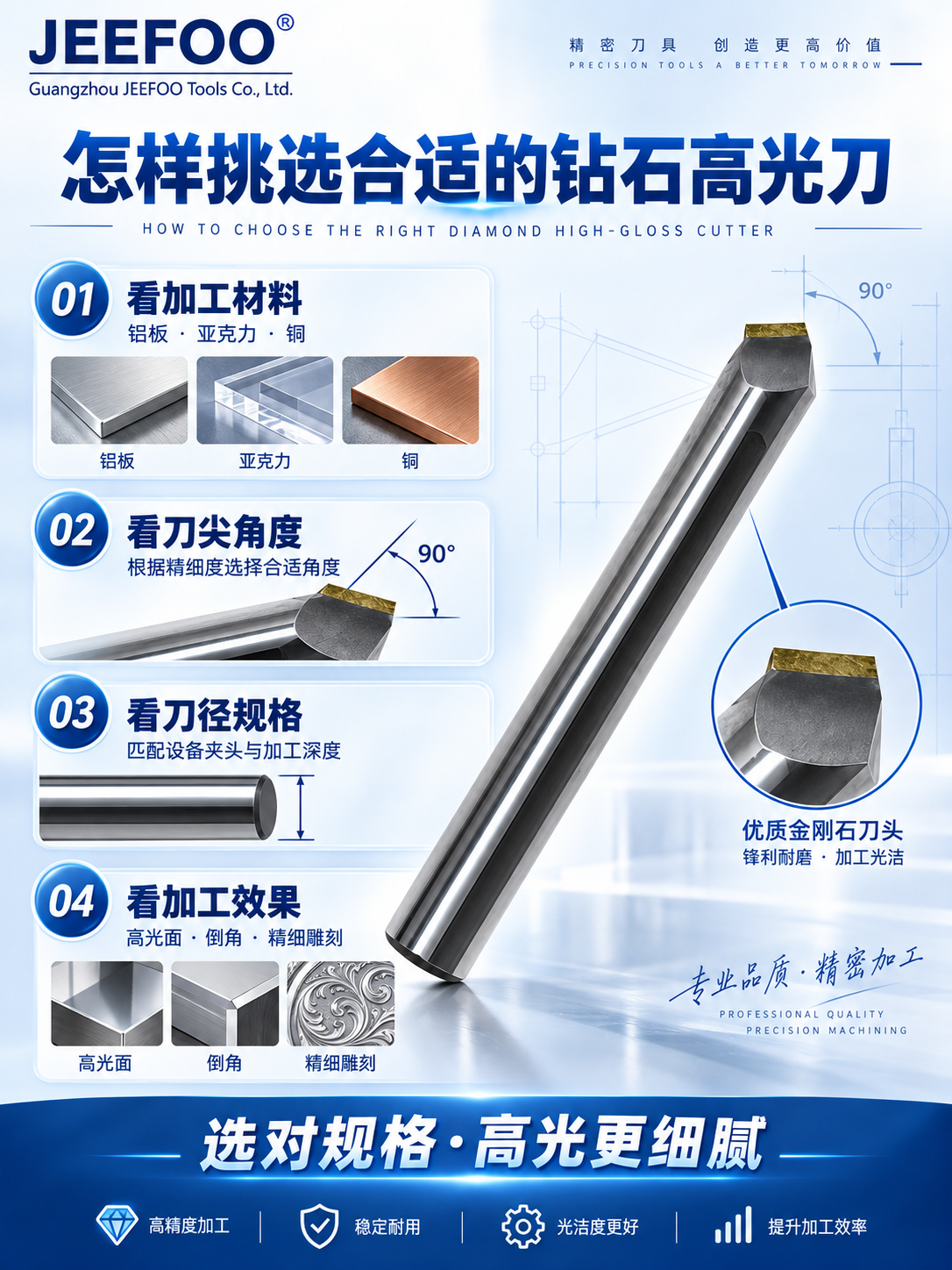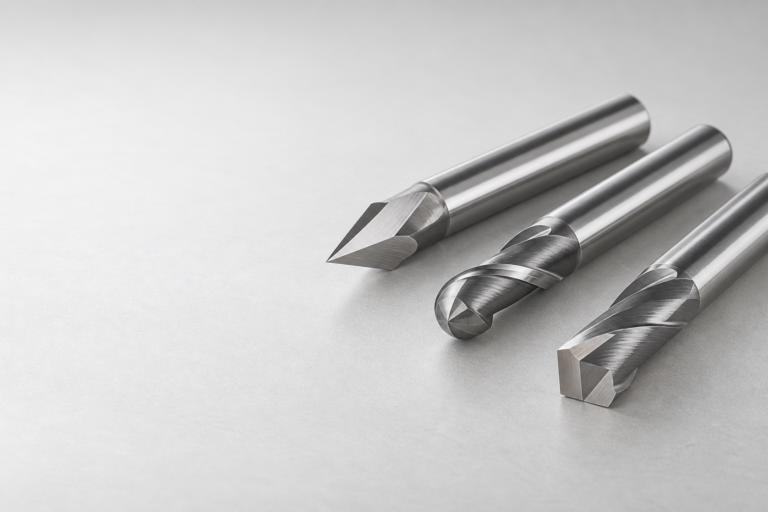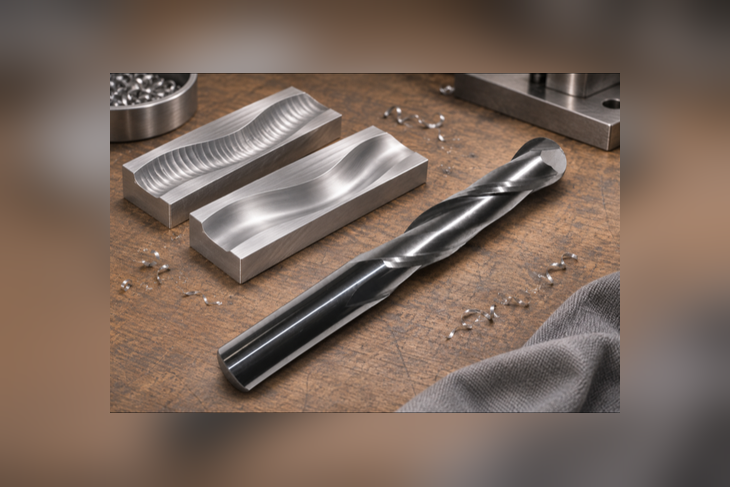
An ornamental wood edge can be easy to examine on a loose sample and difficult to see once that sample is hinged into a presentation case. A hinge may rotate smoothly with an unfinished blank installed, then leave part of the routed contour hidden behind the case lip at the normal viewing position. On a presentation sample routed with the NB cutter, check what a viewer can see from that position before deciding whether the case needs a change.
Check the sightline to an NB-routed sample
CNCBit lists the NB for ornamental furniture edges and decorative molding. Its product page calls for checking the whole profile against the drawing and making a trial pass. Select a routed sample from that trial and mark the end from which the complete edge should be viewed. If the display includes a drawing, identify the details the visitor should be able to match, such as a transition between a raised band and a recessed curve.
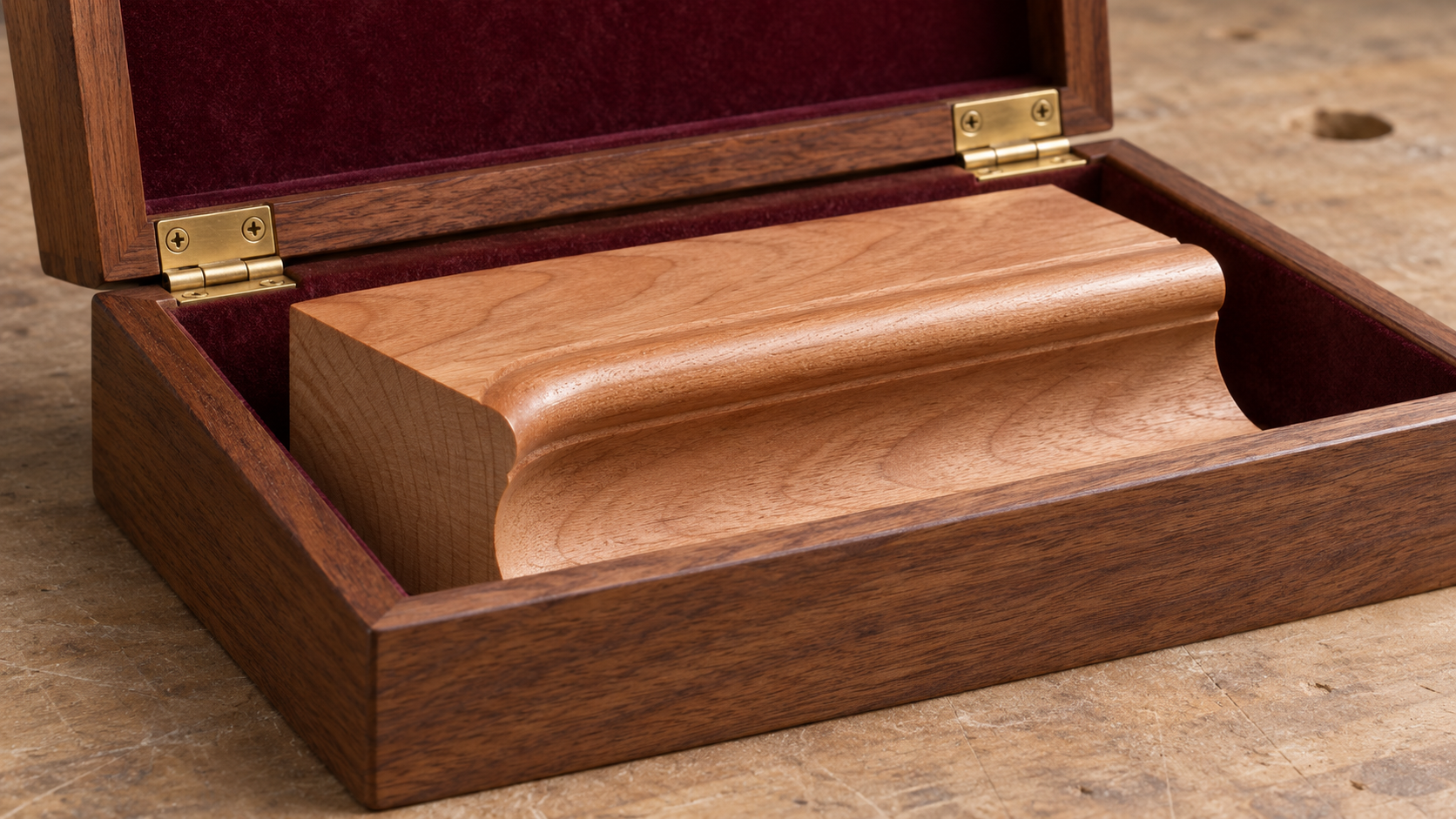
Place the sample in the case and open it to its intended display position. Look from the position where a visitor will stand or sit. A section of the edge may be present but invisible because the case lip falls along the same sightline. Mark the first hidden feature on a photo. Without changing the sample or rotating the hinge further, temporarily move the case lip out of the sightline on a mock-up. If the hidden feature appears, the obstruction is in the presentation arrangement. If the feature remains difficult to see, compare the loose sample from the same angle to determine whether the viewing direction itself needs to change.
Make a separate observation while closing the case. Look for contact between the highest part of the routed edge and the surrounding parts. Record this independently of the visibility check so a clear view in the open position cannot be mistaken for evidence of clearance during closure. Use the approved case drawing to define the opening position, viewer location and minimum clearance. The NB cutter page supplies the profile verification basis for the NB-routed sample.
Related reading: Separate Drawer Reveal From the Shadow of an NF-Routed Profile · Trace a Finish Line Across an NG-Routed Veneered Rail